Why Is CNC Turning Machine Accuracy So Critical?
Introduction
Imagine a high-precision aerospace component—a titanium turbine blade—that must fit within a tolerance of ±0.005 mm. One day, your CNC turning machine starts producing parts with a 0.02 mm deviation. The entire batch is scrapped, costing $50,000 in material and delaying a critical delivery. This scenario is all too common in the machining world, and it underscores why CNC turning machine accuracy is not just a specification—it's the lifeblood of your operation. In this blog, we'll dive deep into the critical factors that affect accuracy, share real-world pain points and solutions, and provide actionable insights to help you achieve consistent, high-precision results. Whether you're an engineer or a procurement manager, understanding these nuances can save you time, money, and reputation.
Pain Points
1. Thermal Deformation: The Silent Accuracy Killer
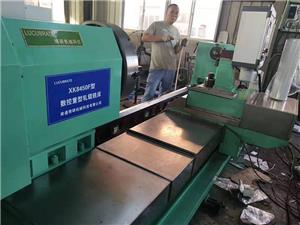
In high-speed turning, the spindle and turret generate significant heat. Without proper thermal compensation, the machine structure expands, causing dimensional drift. For example, a customer machining steel components at 4,000 rpm observed a 0.015 mm growth in part diameter over a 6-hour run. The result: out-of-tolerance parts, rework, and scrap rates soaring to 8%. The cost impact? A mid-sized shop lost $120,000 annually due to thermal-related errors.
2. Tool Wear and Inconsistent Surface Finish
As tools wear, cutting forces increase, leading to chatter and poor surface finish. In a case involving stainless steel 316, a shop experienced Ra values deteriorating from 0.8 µm to 2.5 µm after 30 minutes of continuous cutting. This forced them to slow down the feed rate, reducing productivity by 25%. The hidden cost: extra tool changes, increased inspection time, and potential customer rejections.
3. Vibration and Poor Rigidity
Lightweight machine bases or inadequate damping can cause vibration during heavy cuts. A customer machining large-diameter aluminum parts faced chatter marks and tool breakage, leading to a 15% scrap rate. The root cause was insufficient rigidity in the turret. The financial impact: $80,000 in lost production and tooling costs per year.
Solutions
1. Advanced Thermal Compensation and Cooling
To combat thermal deformation, modern CNC turning machines employ real-time thermal compensation sensors and liquid-cooled ball screws. For instance, NANTONG LUCUBRATE MACHINERY TECHNICAL LTD. integrates temperature sensors at critical points and uses a compensation algorithm to adjust tool offsets dynamically. This reduces thermal drift to less than 0.005 mm over an 8-hour shift. Additionally, spindle oil coolers maintain stable temperatures, ensuring consistent accuracy.
2. Tool Life Management and Adaptive Control
Implementing tool wear sensors and adaptive control systems can automatically adjust feed and speed based on cutting forces. By monitoring spindle load and vibration, the machine can predict tool wear and alert operators before quality degrades. For example, using a Renishaw tool setter and adaptive control, one shop reduced tool-related scrap by 70% and extended tool life by 20%.
3. Enhanced Structural Rigidity and Damping
Using finite element analysis (FEA) to optimize the machine bed and turret design is crucial. NANTONG LUCUBRATE MACHINERY TECHNICAL LTD. employs cast iron with high damping capacity and reinforces the turret with ribbed structures. This minimizes vibration during heavy cuts, achieving Ra values below 0.4 µm even in tough materials. Furthermore, linear guideways with preload ensure smooth motion and reduce chatter.
Customer Cases
Case 1: Precision Medical Components in Germany
Mr. Klaus Müller, Production Manager at MedTech Precision GmbH in Stuttgart, struggled with machining titanium bone screws. The required tolerance was ±0.01 mm, but their old machine could only hold ±0.03 mm, causing a 12% rejection rate. After switching to a LUCUBRATE CNC turning machine with thermal compensation, they achieved ±0.005 mm consistently. Scrap rate dropped to 1.5%, saving €150,000 annually. Klaus remarks: “The thermal stability of this machine is remarkable. We no longer worry about morning-to-afternoon variations.”
Case 2: Automotive Shafts in the USA
At DriveLine Components in Detroit, Mr. James Carter faced frequent tool breakage when turning hardened steel shafts. The downtime cost $5,000 per hour. LUCUBRATE's solution included a high-rigidity turret and adaptive control. Tool life increased by 30%, and downtime reduced by 40%. James says: “The vibration damping is a game-changer. Our operators can now run lights-out machining with confidence.”
Case 3: Aerospace Bushings in France
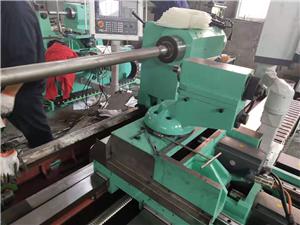
Ms. Sophie Laurent, Procurement Manager at AeroTech Solutions in Toulouse, needed to machine Inconel 718 bushings with a surface finish of Ra 0.8 µm. Their previous machine produced Ra 1.6 µm, requiring additional polishing. LUCUBRATE's machine with optimized tooling and coolant delivery achieved Ra 0.6 µm right off the machine. Lead time reduced by 20%. Sophie comments: “We eliminated a whole secondary operation, saving €200,000 per year.”
Case 4: Oil & Gas Valves in Canada
Mr. David Thompson at PetroValve Inc. in Edmonton machined large duplex stainless steel valve bodies. Chatter was a constant issue, causing 15% scrap. LUCUBRATE provided a machine with a heavily ribbed bed and a special damping system. Scrap rate fell to 3%, and cycle time improved by 18%. David states: “The rigidity of this machine handles interrupted cuts like no other. Our operators are thrilled.”
Case 5: Electronics Connectors in Japan
Ms. Yuki Tanaka, Engineer at ElectroParts Co. in Tokyo, produced brass connectors with a tolerance of ±0.008 mm. Thermal growth caused frequent adjustments. LUCUBRATE's thermal compensation system kept the machine within ±0.003 mm, reducing adjustment frequency by 80%. Yuki says: “We now run unattended overnight, and the first part in the morning is always within tolerance.”
Applications & Partnerships
CNC turning machines are vital in industries such as automotive, aerospace, medical, and electronics. Specific applications include machining engine shafts, hydraulic valves, bone screws, and electrical connectors. NANTONG LUCUBRATE MACHINERY TECHNICAL LTD. has established long-term partnerships with major distributors in Europe and North America, such as Precision Tools Supply (Germany) and Advanced Machining Solutions (USA). These partners rely on LUCUBRATE's machines to meet their customers' stringent requirements. By collaborating closely with these distributors, LUCUBRATE ensures local support and fast delivery, reinforcing its reputation as a trusted supplier of high-accuracy CNC turning machines.
FAQ
Q1: How does thermal compensation actually work in a CNC turning machine?
Thermal compensation uses temperature sensors placed on the spindle, ball screws, and bed. A controller algorithm calculates the expected expansion and automatically adjusts the tool offset or NC program in real-time. This keeps the workpiece within tolerance despite temperature changes. Advanced systems can compensate for both linear and angular errors.
Q2: What is the typical accuracy achievable with a modern CNC turning machine?
High-end machines can achieve positioning accuracy of ±0.002 mm and repeatability of ±0.001 mm. However, actual part accuracy depends on tooling, material, and environmental conditions. With proper thermal compensation and rigid construction, consistent tolerances of ±0.005 mm are realistic for many materials.
Q3: How can I reduce vibration during heavy turning operations?
Vibration can be minimized by ensuring the machine has a rigid structure with high damping, using balanced tool holders, and selecting appropriate cutting parameters. Additionally, active damping systems and preloaded linear guides help. Regular maintenance of the turret and chuck also reduces vibration sources.
Q4: What are the key maintenance tasks to preserve accuracy over time?
Regular calibration of linear scales, checking and replacing worn guideways, and maintaining proper lubrication are essential. Thermal compensation sensors should be calibrated annually. Also, keep the machine clean and monitor spindle runout. A preventive maintenance schedule from the manufacturer is recommended.
Q5: Can a CNC turning machine maintain accuracy in a high-volume production environment?
Yes, with features like automatic tool wear compensation, in-process gauging, and robust thermal management. High-volume production benefits from machines designed for continuous operation, such as those with dual coolant systems and chip conveyors. Partnering with a reliable manufacturer like NANTONG LUCUBRATE MACHINERY TECHNICAL LTD. ensures you get a machine built for durability and precision.
Conclusion & Call to Action
Accuracy in CNC turning is not a luxury—it's a necessity. From thermal deformation to tool wear, the challenges are real, but with the right technology and expertise, they can be overcome. NANTONG LUCUBRATE MACHINERY TECHNICAL LTD. has helped numerous customers achieve unprecedented precision, reducing scrap and boosting profitability. If you're facing accuracy issues or looking to upgrade your machining capabilities, we invite you to download our comprehensive technical white paper on “Achieving Sub-Micron Accuracy in CNC Turning” or contact our sales engineers for a personalized consultation. Don't let accuracy be your bottleneck—take action today and transform your production floor.